Book Now
Arrow right icon

Blog

5 Essential Stretches to Do After Your First Climb

Your forearms are pumped, your legs are jelly, and you're already thinking about when you can come back. Here's a quick 5-minute stretch routine to help you recover faster after your first climb at Hangdog.

5-stretches-after-first-climb

Congratulations — you've just finished your first session at Hangdog. Whether you felt like a superhero or just discovered a new respect for gravity, you've taken your first step into an awesome new world. Right now you're probably feeling a mix of adrenaline and accomplishment. Tomorrow you'll likely be feeling something else: soreness in muscles you didn't even know you had.

This is completely normal. It's called Delayed Onset Muscle Soreness (DOMS), and it's a sign that you challenged your body. The good news is that a few simple stretches right after your climb can make a real difference — helping you recover faster and get back on the wall sooner.

Here are five beginner-friendly stretches to make a habit of after every session.

1. The Forearm & Finger Stretch

Why you need it: Your grip muscles worked overtime today. Your forearms and fingers did a ton of pulling, and this stretch helps release that tension and prevent stiffness.
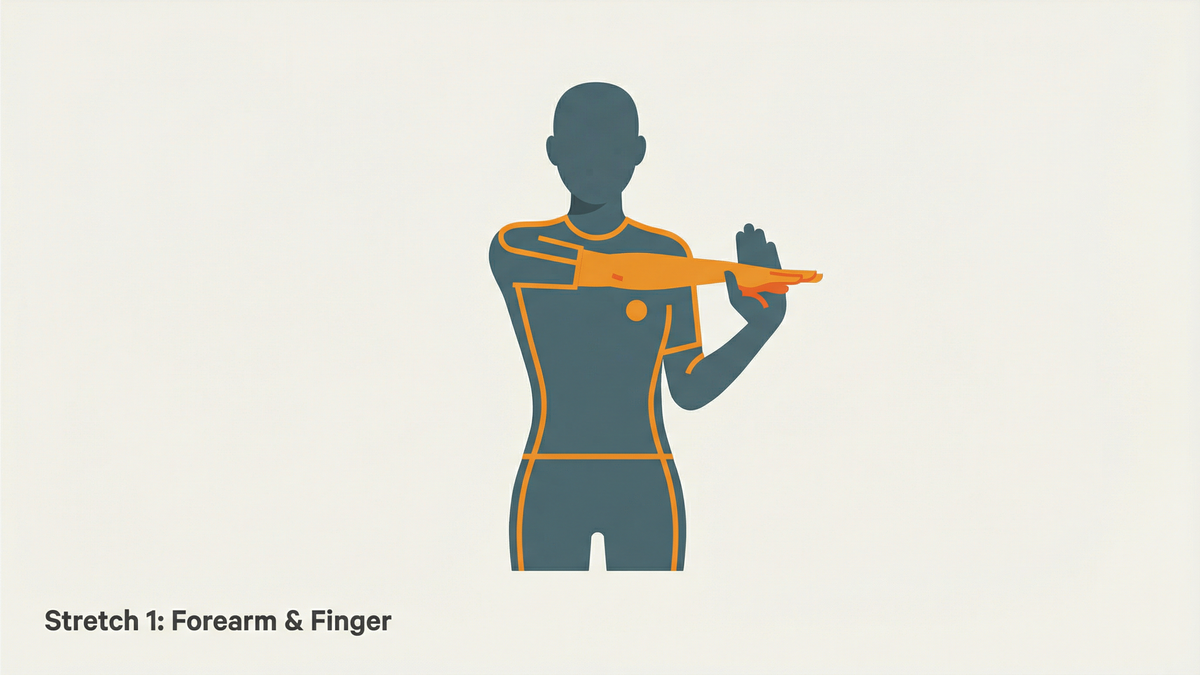
Stretch 1: Forearm and Finger Stretch illustration

How to do it:

  1. Extend one arm straight out in front of you, palm facing up.
  2. With your other hand, gently press the fingers of the extended arm down towards the floor. You should feel a stretch in your forearm and wrist.
  3. Hold for 20–30 seconds.
  4. Flip your hand so the palm faces down. Gently pull your fingers back towards your body.
  5. Hold for another 20–30 seconds, then repeat on the other arm.
2. The Doorway Chest Stretch

Why you need it: Climbing involves a lot of pulling and rounding your shoulders forward. This stretch opens up your chest and the front of your shoulders, improving posture and relieving upper back tension.
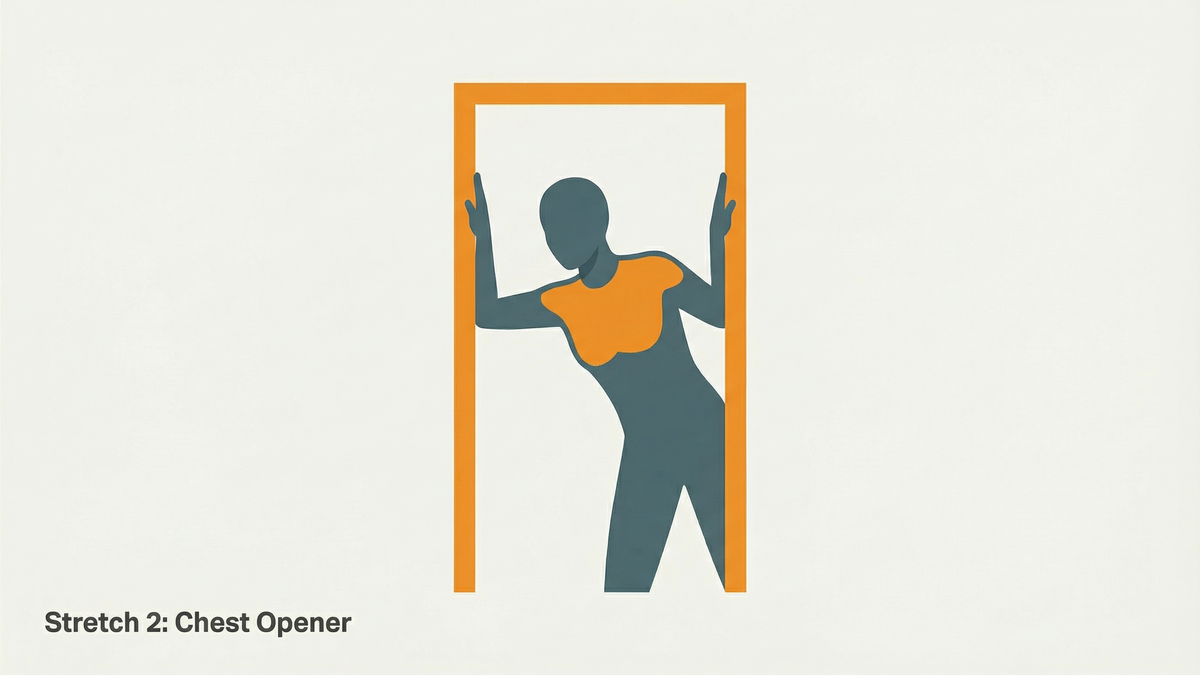
Stretch 2: Doorway Chest Opener illustration

How to do it:

  1. Find a doorway or the corner of a wall.
  2. Place your forearms on either side of the frame, elbows bent at 90 degrees.
  3. Step one foot forward through the doorway until you feel a gentle stretch across your chest.
  4. Keep your core engaged and avoid arching your lower back.
  5. Hold for 30 seconds, breathing deeply.
3. The Figure-Four Hip Stretch

Why you need it: You might be surprised how much you used your hips for high steps and balance. This stretch targets the glutes and piriformis, which can tighten up and lead to lower back pain if ignored.
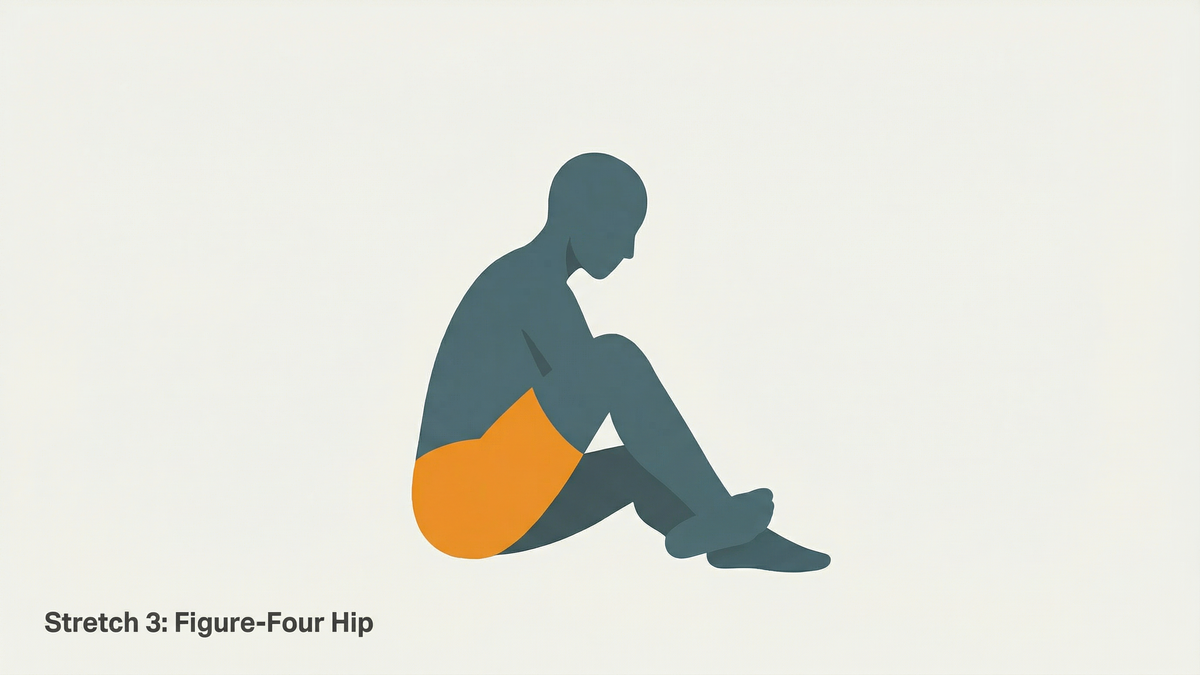
Stretch 3: Figure-Four Hip Stretch illustration

How to do it:

  1. Sit on the floor with your knees bent and feet flat.
  2. Cross your right ankle over your left knee, creating a "figure four" shape.
  3. Gently lean your torso forward until you feel a stretch in your right hip and glute.
  4. Hold for 30 seconds, then switch legs and repeat.
4. The Hamstring Stretch

Why you need it: Flexible hamstrings are key for high foot placements and overall mobility on the wall. Stretching them helps prevent injury and improves your reach over time.
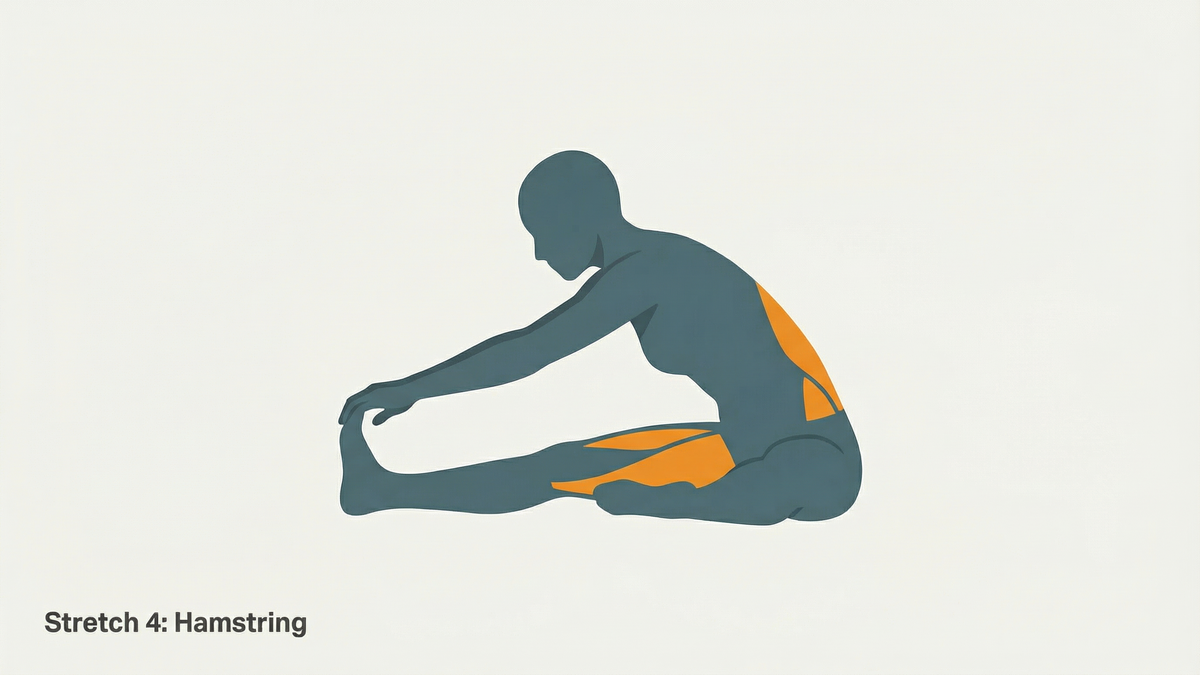
Stretch 4: Seated Hamstring Stretch illustration

How to do it:

  1. Sit on the floor with one leg extended straight out in front of you.
  2. Bend your other leg, placing the sole of your foot against your inner thigh.
  3. Hinge at your hips and gently lean forward over the straight leg, keeping your back straight.
  4. Reach toward your foot — don't worry if you can't touch it. Just go until you feel a good stretch in the back of your thigh.
  5. Hold for 30 seconds and repeat on the other side.
5. The Cat-Cow Stretch

Why you need it: Your spine does a lot of work — from arching back to look up at a route to hunching forward for a powerful move. This gentle stretch mobilises your spine and releases tension in your back and neck.

Stretch 5: Cat-Cow Stretch illustration

How to do it:

  1. Start on your hands and knees in a tabletop position, wrists under your shoulders and knees under your hips.
  2. Cow: Inhale as you drop your belly towards the floor, lifting your chest and tailbone to the sky.
  3. Cat: Exhale as you press into your hands, rounding your spine up towards the ceiling and tucking your chin to your chest.
  4. Flow between these two positions for 5–10 full breaths.

These five stretches take about five minutes. Do them every time you climb and you'll feel less sore, move better on the wall, and be ready to come back sooner. Welcome to the community — we're stoked to have you.