Book Now

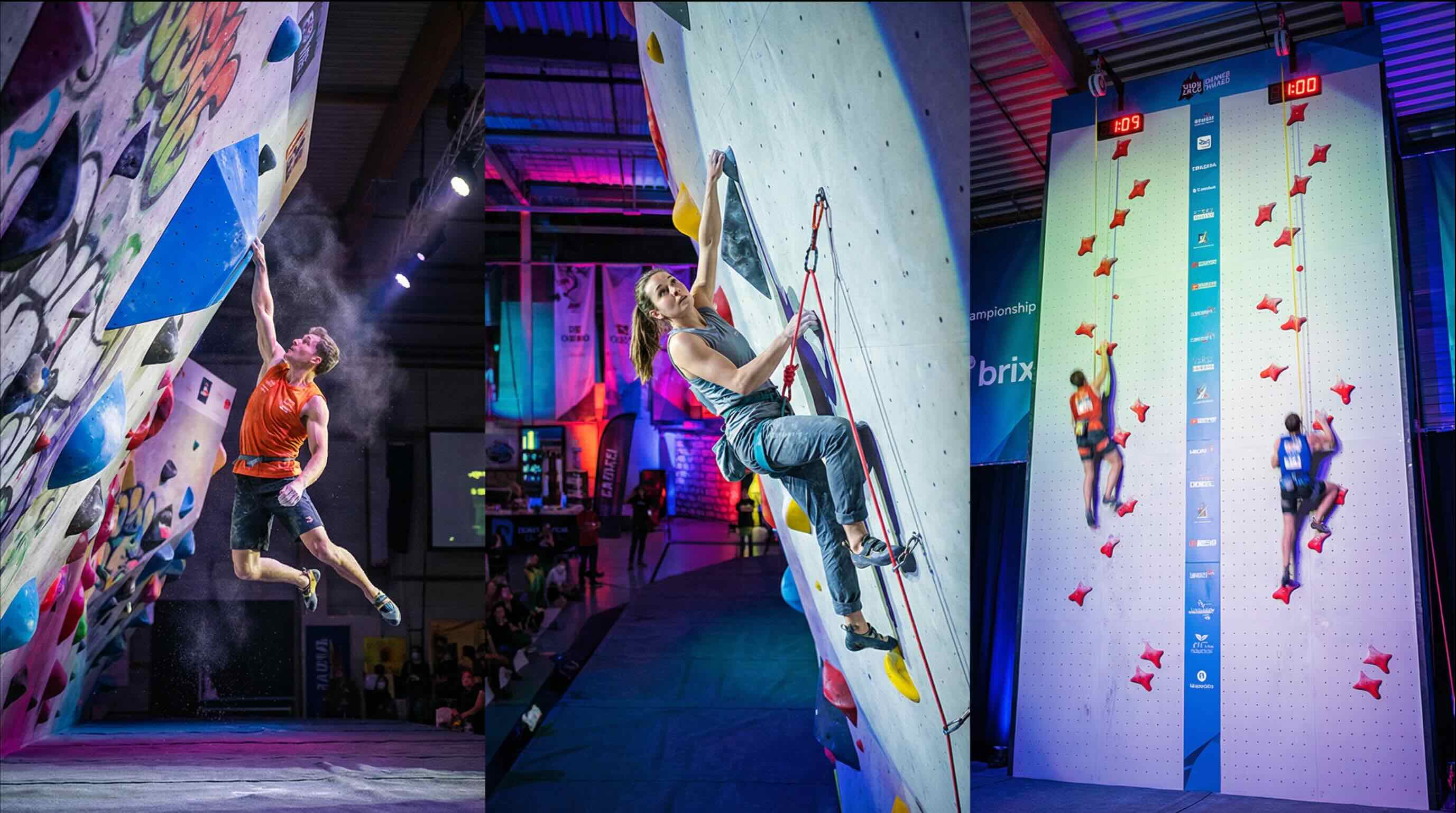
Sport climbing at the LA 2028 Olympics will award separate medals for Boulder, Lead, and Speed. Learn which discipline suits you best and how to train like a specialist with our one-week challenge.
Sport climbing at the LA 2028 Olympics will award separate medals for Boulder, Lead, and Speed, a significant departure from the combined format of previous Games. This change is already shaping how professional athletes—and savvy gym climbers—think about their training.
For years, the Olympic format forced climbers to be generalists, competing in all three disciplines. But with the LA28 Games, the era of the specialist has truly begun. This is great news for everyone, from the pros to the everyday climber at Hangdog. Why? Because it acknowledges a fundamental truth: the three disciplines of climbing reward very different bodies, brains, and training approaches. Most of us in the gym train "a bit of everything" without realizing we might be a boulderer trapped in a lead climber's warmup routine. This guide will help you self-identify your climbing specialty and provide a simple plan to start training like a specialist.
What Changed for LA28 and Why It Matters for You
The journey to three separate medals has been a gradual one. Sport climbing made its Olympic debut at Tokyo 2020 with a controversial combined format, where athletes competed in all three disciplines for a single medal. For the Paris 2024 Games, Speed climbing was separated into its own medal event, while Boulder and Lead remained combined. Now, for the Los Angeles 2028 Games, the International Olympic Committee (IOC) has announced that all three disciplines—Boulder, Lead, and Speed—will have their own separate medal events.
This is a game-changer, not just for the pros, but for every climber who walks into Hangdog. It validates the idea that each discipline is a sport in its own right, with unique demands and rewards. As IFSC President Marco Scolaris said, "Each of our disciplines has its own unique strengths, and now everyone will see these at LA28." For you, this means you can stop trying to be a jack-of-all-trades and start honing the skills for the discipline you truly love.
The Three Discipline Profiles: Which One Are You?
So, how do you know which discipline you're best suited for? Here's a breakdown of the three profiles:
Boulder: The Powerhouse
Are you drawn to short, powerful movements and the intellectual puzzle of unlocking a sequence? Do you love the feeling of sticking a dyno or holding a tense, full-body position? If so, you might be a boulderer.
Body: Bouldering rewards explosive power, a high strength-to-weight ratio, and the ability to generate maximum force in short bursts. Think powerful shoulders, a strong core, and iron fingers.
Brain: Bouldering is a mental game of problem-solving. It's about reading the route, visualizing the moves, and having the creativity to try unconventional solutions. It also requires intense focus and the ability to rest effectively between attempts.
Training Focus: Power, tension, limit attempts, and strategic rest.
Lead: The Endurance Machine
Do you enjoy the rhythmic flow of a long climb, the mental challenge of pacing yourself, and the satisfaction of clipping the chains on a towering route? If so, you might be a lead climber.
Body: Lead climbing is an endurance sport. It requires aerobic power, the ability to recover on the wall, and the stamina to keep going, even when your forearms are screaming. Think of it as a vertical marathon.
Brain: Lead climbing is as much a mental battle as a physical one. It's about managing fear, staying calm under pressure, and making smart decisions about when to push and when to rest. Pacing and energy conservation are key.
Training Focus: Aerobic power, pacing, shake-out techniques, and fear management.
Speed: The Precision Athlete
Do you have a need for speed? Are you obsessed with efficiency, precision, and the thrill of a head-to-head race? If so, you might be a speed climber.
Body: Speed climbing is all about explosive power, but in a highly repetitive and precise way. It requires a unique combination of lower-body power for explosive leg movements and upper-body strength for quick, efficient pulls.
Brain: Speed climbing is about turning off your brain and letting muscle memory take over. It's about drilling a sequence until it's second nature, and then executing it flawlessly under pressure. It's a test of precision and repeatability.
Training Focus: Precision, repeatability, and explosive consistency.
The One-Week "Mini-Specialization" Challenge
Ready to dip your toes into the world of specialized training? Try this one-week, three-session challenge to get a taste of what it's like to train for each discipline.
Session A: Boulder Power — Focus on limit bouldering. Pick 3-4 problems that are at your absolute limit. Spend 10-15 minutes on each, resting 2-3 minutes between attempts. The goal is not to send, but to try your hardest on every single attempt.
Session B: Lead Endurance — Find a route that you can climb comfortably. Climb it up and down in a "ladder" format. For example, climb up 4 bolts, downclimb to the 2nd, climb up to the 6th, down to the 4th, and so on. This will build your aerobic power and teach you to recover on the wall.
Session C: "Speed-Style" Footwork — Even without a speed wall, you can train for speed. Pick an easy boulder problem and climb it as fast as you can, focusing on precise and explosive footwork. Do this 10 times, resting 1 minute between each attempt. The goal is to make every movement as efficient as possible.
Common Mistakes to Avoid
As you start to specialize, be mindful of these common training traps:
The Boulderer's Blunder: Doing endless easy laps and calling it "endurance." This builds fatigue, not the specific type of endurance needed for lead climbing.
The Lead Climber's Lament: Only projecting hard moves and never building a solid base of endurance. This is like trying to build a pyramid from the top down.
The Universal Oversight: Ignoring footwork because it's not as glamorous as a one-arm pull-up. Your feet are the foundation of your climbing, so don't neglect them!
Your Challenge: Pick Your Discipline
Now it's your turn. Pick your discipline for the month of March and commit to it for four weeks. Tell our staff at the front desk what you've chosen, and we'll point you to the right terrain and give you some tips to get started. We can't wait to see what you can achieve when you train like a specialist.
And for some inspiration, be sure to check out the IFSC 2026 season calendar. It's a great way to see the world's best climbers in action and get psyched for your own training.